Utopia on the radio: climate justice and utopia-related podcasts.

For those times when reading is impractical – chopping vegetables, folding laundry – you can still absorb utopian content through your ears. Have I made that sound appealing? What I mean to say is you can listen to inspiring and funny podcasts about climate justice and the possibility of a better world. Such as these.

Free-Thought Podcast by Shuddhashar

I came to this podcast for an interview with Dr Heather Alberro, an academic working in the area of social and political sciences. Alberro has an interest in green utopianism and the interview discusses the challenges of ‘creating a world that is sustainable and environmentally just’.

Alberro explains with such ease how the good health of economies and the environment are intertwined it makes you wonder how anyone thinks we should have to choose one over the other.

The whole idea behind environmental justice is that these things are very closely intertwined, you can’t have ecological wellbeing and sustainability without guaranteeing social wellbeing, breaking down hierarchies around class, race, gender, access to resources.

Dr Heather Alberro

After the interview with Alberro, I rolled straight into the next episode – an interview with anthropology scholar Avery Delany about decolonisation. I am very intrigued by this podcast series.

Jon Richardson & The Futurenauts

Comedian Jon Richardson, of BBC 6 Music Sunday morning radio show fame (yeah he’s done some telly and stand up since), hosts this podcast with futurists/Futurenauts Ed Gillespie and Mark Stevenson. The structure of each episode on subjects such as food, work, energy and nature is based around two questions. Firstly, how fucked are we? (Invariably, royally.) Secondly, how do we unfuck ourselves?

In series two they consciously invited guests in to break up their all-bloke line up a little. Highlights for me were Kate Raworth, author of Doughnut Economics, on the Future of Economics and an episode on the Future of Shit (yes, human faeces) with Rose George. I think about that one every time I flush the toilet, and every time I don’t.

I have to say though I think I preferred the first series. Three people saying stuff I agree with about topics that worry me and making it funny, with some practical ideas too. I found it reassuring and hopeful.

Mothers of Invention

Climate change is a manmade problem with a feminist solution. Boom! Each episode of this podcast features women around the world who are taking action in their communities to change the world for the better. The show invites them to tell their own stories of inventing sustainable solutions to the climate problems they face.

Learning about these womens’ fights for climate justice is inspiring and inspires hope. This is another hugely uplifting podcast about terrifying issues.

The hosts are former Irish president Mary Robinson and comedian Maeve Higgins, joined by their producer Thimali Kodikara in series three.

ASLE EcoCast

This is the literary entrant in my list. The ASLE EcoCast is the podcast of the Assocation for the Study of Literature and Environment, an academic society. Each episode the hosts are joined by a different academic working in the areas of literature and the environment.

I have two favourite features of the show. Firstly, host Jemma Deer exploring the etymology of an apposite word like ‘forest’, ‘scene’ or ‘book’ in a poetic kind of way at the start of each episode. Secondly, I like hearing about the guest’s route into academia and whatever specific area of interest they are currently working on. Hearing their way in gives me a way into their work. It also makes me wonder what story I might tell in the future…

Listening to climate justice and utopia podcasts
That’s it folks, happy listening! Let me know your recommendations in the comments or contact me here.

Pandemic dystopias, apocalypse and hope

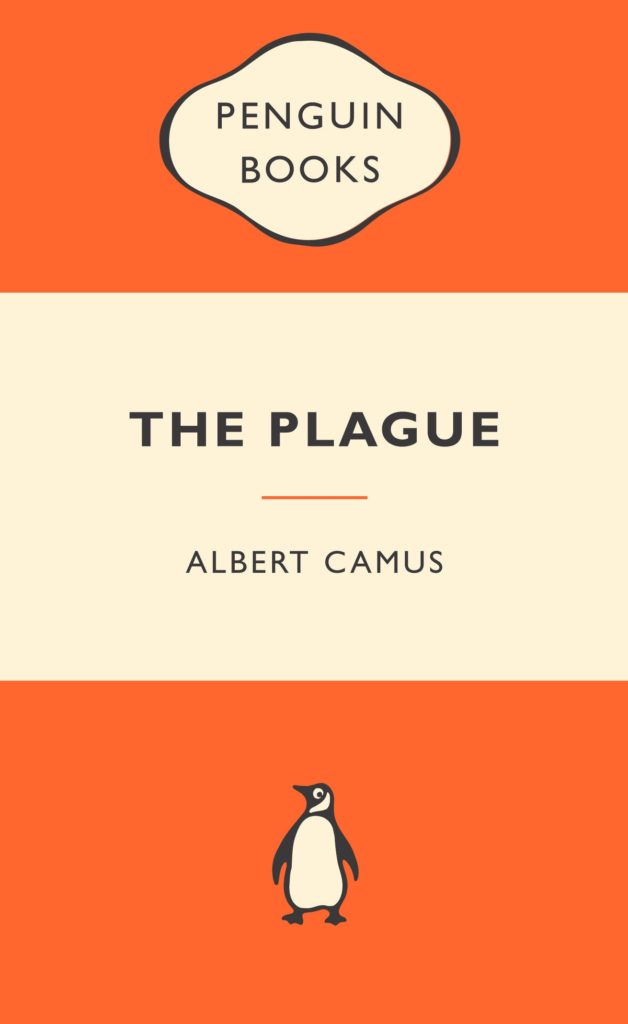
I read Albert Camus’ The Plague during the swine flu pandemic in 2009. I thought I was being very droll. What happened was I got things all out of proportion. Nothing really came of swine flu in the UK. No-one had to change anything in their daily lives. One person in my office got it and was off sick for a bit. We drew up business continuity plans, but they never got enacted. I, however, with a head full of The Plague, was terrified.

For all the lols, why not read The Plague during a pandemic?

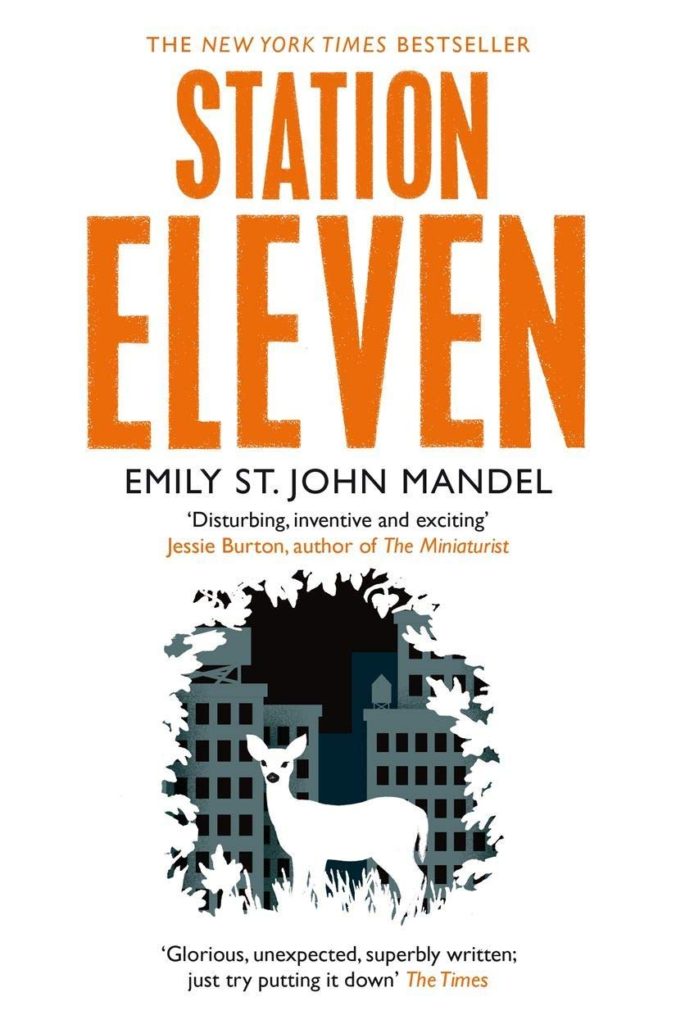
Then would you know it, for our Utopian Book Group meeting in March 2020 we thought we would read Emily St John Mandel’s Station Eleven. A speculative fiction about a flu pandemic that kills most of the world’s population. While a coronavirus pandemic is brewing IRL. What japes! We held our book group meeting in person on 2 March 2020. Three weeks later the UK went into lockdown and a book group meeting in a cafe has been out of the question ever since.

So what insight can I share from reading a pandemic dystopia in a pandemic this time round?

The world has changed

At first I was oddly reassured when reading Station Eleven. Our pandemic isn’t as bad as that, I thought. Mortality rate is much lower. Doesn’t spread so fast. Then I got to this passage:

One of the great scientific questions in Galileo’s time was whether the Milky Way was made up of individual stars. Impossible to imagine this ever having been in question in the age of electricity, but the night sky was a wash of light in Galileo’s age, and it was a wash of light now. The era of light pollution had come to an end. The increasing brilliance meant the grid was failing, darkness pooling over the earth. I was here for the end of electricity. The thought sent shivers up Clark’s spine.

“The lights will come back on someday,” Elizabeth kept insisting, “and then we’ll all finally get to go home.” But was there actually any reason to believe this?

Emily St John Mandel, Station Eleven, p.251

The funny thing about reading a pandemic dystopia in a pandemic is you can start reading it as a kind of handbook instead of as a fiction. It may have been speculative when it was written, but when it’s actually happening you look for what you can learn from it in a more immediate kind of way.

The unsettling (understatement) truth I learnt from this passage is a pandemic is history-changing. It’s not a little side path you meander down for a while before it brings you back to the main road. It’s a different route. You’re not going back to the road you thought you were on, you’re going somewhere else. You never were going to go down that main road, and now you know.

Apocalypse; noun. From the Greek apokaluptein ‘uncover, reveal’

Scary, right? It is an apocalypse, not in the sense that the world is ending but in its original meaning of an unveiling. The pandemic will end, pandemics always end. But we have seen things. We have seen how a virus, an agent without sentience or political agenda, can find and demonstrate every point of weakness in our society. Mostly, we have seen that we made this pandemic happen.

I highly recommend listening to or reading Shaking the Viral Tree: An Interview with David Quammen over on Emergence Magazine.

David Quammen is a scientifc journalist and author of Spillover, published in 2012. In his words back in 2012, “zoonosis [infection that spreads from animals to humans] sounds like a technical word, an unfamiliar word, but it’s going to become very familiar to people in the twenty-first century”.

Above: Trailer for David Quammen’s 2012 book Spillover

The main thing I learnt from the interview is that a pandemic isn’t a statistical blip. It isn’t a chance occurrence, wholly unconnected with human activity. Just as a hurricane, flood or drought isn’t necessarily just weather anymore now we’ve screwed up the climate, a pandemic is the result of us overstepping ecological boundaries.

(I would like to remember at this point that the world has been changed by some humans more than others. When I say ‘we’ and ‘us’ I’m speaking as a white European.)

Once you realise this stuff, you realise WE CAN’T GO BACK. If you think you can, you’re deluded like Elizabeth in Station Eleven.

Pandemic… utopias?

The idea of a pandemic utopia is in incredibly bad taste. Over 125,000 people have died so far in this pandemic in the UK at the time of writing this post. If anyone told me they wanted to make a utopia out of this I would tell them to fuck off. But this whole ongoing event has shown us (if we are willing to see) that we need to start living differently.

There is already talk circulating of a new ‘roaring twenties’ after the pandemic, a frenzy of hedonistic consumption and jet-setting. Apparently this idea is giving some people hope and something to look forward to. Not me. It shows me that we need utopian thinking to save us from re-enacting our former mistakes in the pursuit of happiness.

We need to imagine ecologically sound, fairer and healthier ways of being – and of partying, celebrating and finding joy. So, I fervently hope that utopias can and will proliferate in the wake of the pandemic, rising phoenix-like from the ashes of all this shit.

Five top tips for imagining climate fiction utopias

Climate fiction utopias could be enormously important. We all know by now the horrors that await if we carry on as we are. This knowledge can be paralysing and depressing. What we need to envision are alternative ways of being where we are on the right track. We need to believe that alternative futures are possible.

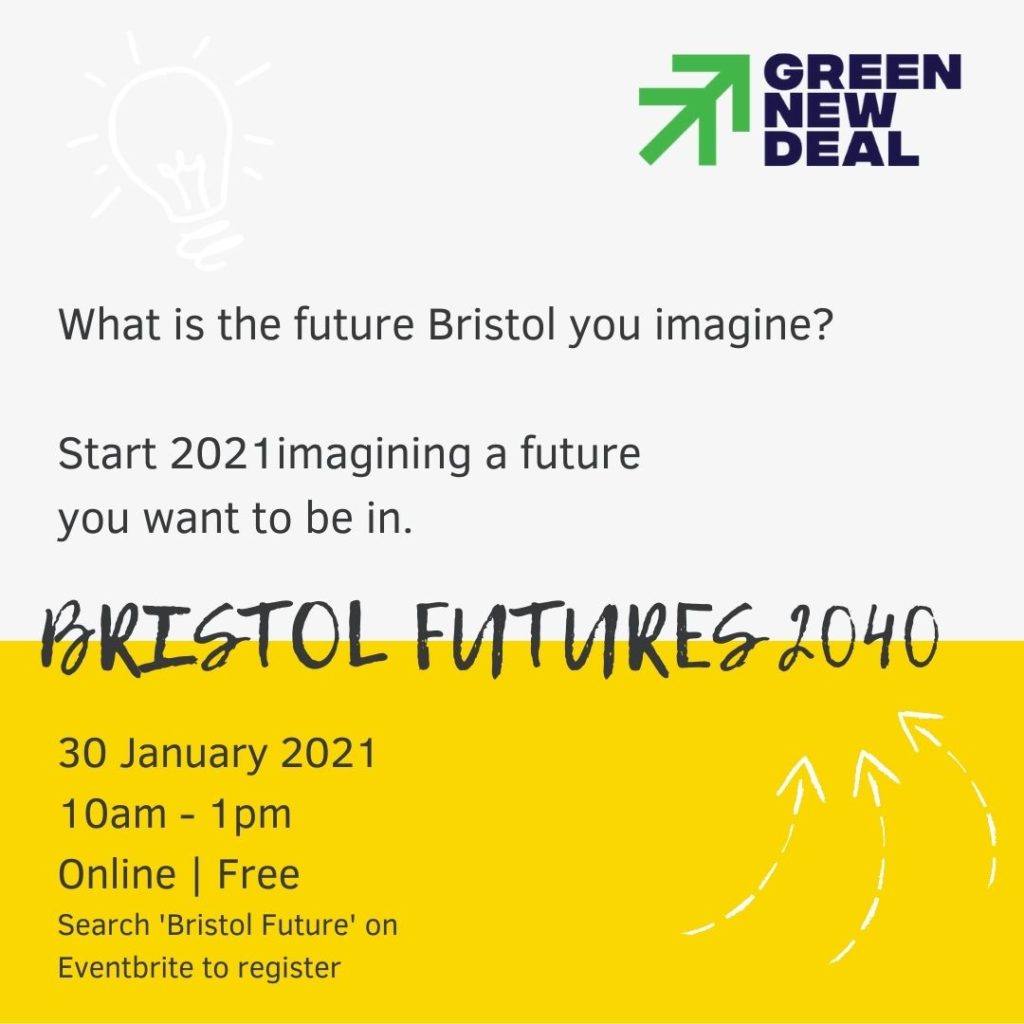
This is where climate fiction utopias come in. I recently participated in a workshop on this subject organised by Green New Deal UK – Bristol and hosted by Sophia Cheng of Cli-Fi For Beginners and Deborah Tomkins of Bristol Climate Writers. The writing prompt was to imagine Bristol in 2040: “Bristol is a city transformed through its citizens’ collective vision and committed action. What do you see?”

What I want to share with you from the workshop isn’t a piece of creative writing, because I didn’t come up with anything (let alone anything good). But I certainly thought a lot about the genre of climate fiction and what a climate fiction utopia needs to do in order to achieve its radical potential.

Keep it radical

If you imagine a near future climate fiction utopia you might think of a family who have solar panels to generate all the electricity they need to power their home and electric car, and who grow their own veg according to organic principles. This seems uncontroversial enough, right? But stop and ask yourself, are they a nuclear family unit living in a privately owned home with a private car? Are they white, able-bodied, straight, cisgender?

What I’ve outlined above isn’t a utopia, it’s an aspirational middle class lifestyle within the already existing status quo. What a climate fiction utopia needs to do is think differently, to be based on a different system of thought, where different ways of living and being are in action, are being enacted. When it does this, it might achieve its radical potential of teaching us to imagine alternative and better ways of being. And, bearing in mind that whatever we want we have to imagine first, if climate fiction utopias can teach us how to imagine better ways of being they can give us hope. Hope that we will end up somewhere other than in climate catastrophe.

With that in mind, these are my five top tips for harnessing the radical potential of climate fiction utopias.

1. Imagine the future, not the present

Here in Bristol, UK in 2021 you can already have organic oat milk delivered to your door, cycle to work and eat local, seasonal food for lunch. Sometimes it’s nice to realise there are choices you can already make to feel better about the future. But to imagine climate fiction utopias, we need to go beyond what already exists.

Climate fiction is a subgenre of science fiction. There should be some sort of novum – a technological or societal innovation that has enabled a significant change in the way we live. And as we’re talking about utopias, it should be something that has brought about a better way of being.

2. Don’t just write a shopping list

In the city of the future maybe you can buy honey made in hives on the roofs of skyscrapers clad in living walls of bee-friendly flowers. Maybe on the high street there’s a weaver’s workshop next door to a tailor and you can commission them to make you bespoke cruelty-free clothes from organic, regional materials. They sound like lovely things to buy. And there’s the rub. This is a dream of buying lovely things. Dreamt by a dreamer who lives in a consumer capitalist society. We need to think of a future that we make, not one that we buy. We need our climate fiction utopias to think beyond capitalism.

3. Climate fiction should be more than marketing for green tech

Scientists and technologists need artists and writers to help communicate the climate emergency. But art is needed for emotional engagement, not advertorials. The greatest power of fiction is not to showcase green tech. Far far far greater is its power to drive change by fostering new ways of thinking.

New types of home insulation might feature in a climate fiction utopia, but featuring a new type of home insulation shouldn’t be the purpose of a climate fiction utopia.

4. Borrow this technique from the genre of utopia

Setting out a new world can involve a lot of exposition. Asking the inhabitants of a climate fiction utopia to volunteer it in private musings or even in conversation with each other can get clunky. People don’t tend to wake up in the morning and think about where their electricity comes from (even if they should), they check their phone and put the kettle on. So if a character in a climate fiction starts the day thinking about how their utilities work this can undermine our belief in the plausibility of the utopia.

Luckily, there’s a tried and tested solution used in literary utopias. Get some sort of guest or visitor in to question what everyone’s up to.

GUEST: Cor it's toasty in here, don't you worry about your gas bill?
UTOPIAN: What? No, no-one's used gas for years, decades now. Here, do you want a cup of tea?
GUEST: Yes please. I suppose it's nuclear?
UTOPIAN: Um, I've got camomile if you want decaff?
GUEST: No the heating, is it nuclear?
UTOPIAN: Er no, it's from the ground source heat pump.

Now you’re seeing why I stick to essays rather than creative writing. Hopefully I’ve not disproved my point that having an outsider prompt the utopians to talk can be a more naturalistic way of imparting information about an imagined society.

5. Think about who is in the future

This is sci-fi. You can imagine anything. So don’t just imagine a slightly different bunch of white blokes (or even white women) running the world, please.

Added value of my five top tips

Here’s an added bonus for you – you can also critique any climate fiction utopias you happen to be reading using the five points above. Ask of the text, does it enable you to imagine a reality that does not currently exist? Is the world it portrays organised according to a system other than consumer capitalism? Does it engage you emotionally and make you re-examine your feelings about the climate emergency? Is it well written? Finally, does it imagine a future that empowers a diverse range of people?

Alrighty, I hope we’re all nicely equipped to go out and change the world through the medium of climate fiction utopias.

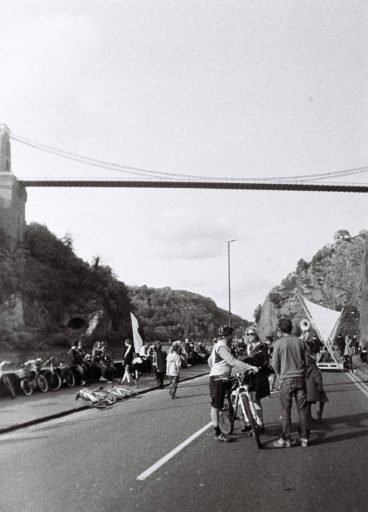
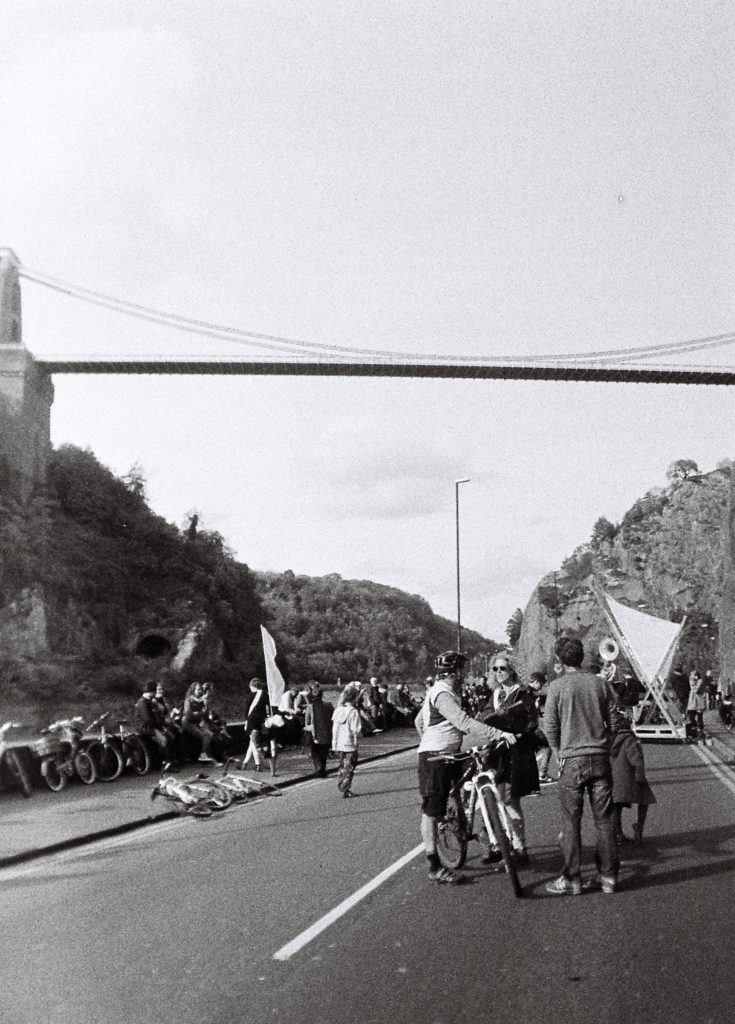
Peaceful Portway, Bristol 2015. Photo by the author.

Just Utopias is now open for submissions!

I’m pleased to announce that Just Utopias is now accepting submissions!

Would you like to contribute a blogpost for the Just Utopias blog? Essays, reviews, previews, audio, video, photos, art, creative writing… I would love to feature anything you write or make about utopia, climate justice and related themes.

Alternatively, if there is something you think I should write about, someone I should interview (it could be you!) or something I should read or see, then let me know.

Send an outline of what you’re thinking of using the contact form and I’ll be in touch. I’m excited to hear your ideas!

Blossoming, March 2021

Black Utopias, Forecast and New Suns

Hello, how are you doing? Spring is coming where I am and it’s all taking off. Here’s a round up of the utopian books and events on my radar this week.

Black Utopias, Jayna Brown

I was excited to receive my copy of new release Black Utopias by Jayna Brown this weekend. I pre-ordered after spotting a tweet from the author and I have a copy in my hands now too! I’ve come for the interpretation of Octavia E. Butler and Samuel R. Delany’s speculative fiction but I’ll stay for the Black women mystics and Sun Ra.

Arrived here too!

Forecast by Invisible Dust

Coming up this week (3rd – 7th March 2021), Invisible Dust are presenting Forecast, a series of online events, performances and screenings. Invisible Dust is an organisation bringing artists and scientists together for creative projects and discussion on environment and climate change.

I’ve tried to pick out a few events to highlight but honestly it all looks amazing. I love the questions being posed for the panel discussions: What is shaping how you think about the planet’s future? How can we use the past to understand the future? What will our view of nature bring to the future? Who chooses our future and how? Then there are all the fascinating artist projects being showcased too.

Contributors hail from all over the world, which is brilliant to see. This is as it should be for a programme of events on climate change and the future but often isn’t the case.

I’m hoping to catch a couple of lunchtime events live but the early evening events are at an awkward time for me (dinner time and bedtime for our 4yo, not a time when I can get away with watching stuff on my computer when we’re all in the flat together). Luckily, there’s a weekend pass giving access to all the recordings from 9pm on Fri 5th March to 11pm Sun 7th March (GMT). Even so, I know I won’t get enough time over one weekend to catch as much of it as I want to.

New Suns: A Feminist Literary Festival

I just found out about the New Suns festival happening virtually at the Barbican this weekend, 5-7 March 2021. The whole weekend is dedicated to exploring the legacy of Octavia E. Butler’s science fiction, in particular the Earthseed series. It’s a clash with Forecast of course but the New Suns pass gives access to recordings until the end of the day on Tuesday 9th so I’m hoping to find enough hours to squeeze in both.

Events I definitely do not want to miss are: the screening of Donna Haraway: Story Telling for Earthly Survival, which I’ve wanted to watch for ages; the keynote talk ‘The Parables of Octavia Butler: adrienne maree brown in conversation with Ama Josephine Budge’ (adrienne maree brown’s book Pleasure Activism is on my want-to-read list); and the workshop on journaling/diary writing with London Review of Books.

North America: a failing colonialist utopia?

Pandemic. Wild fires. Climate crisis. Biodiversity crisis. Rise of the far right. Sometimes, it seems like things aren’t going so well.

I heard an Indigenous viewpoint on the multiple crises facing North America (and the world) from scholar Dr Kim TallBear at the ASLE (Association for the Study of Literature and Environment) Nearly Carbon Neutral virtual conference in July 2020. It was enlightening, perspective-shifting stuff. I want to share with you some of the thoughts that have stayed with me ever since.

What TallBear believes she is witnessing in the US is “the implosion of the western colonial project”. In other words, the current crises can be seen as catastrophic consequences of settler-colonialism. Consequences of disrespecting and destroying the land and its peoples: humans, plants, animals, minerals and water. Consequences of arriving on an already occupied continent and perceiving it as an empty page on which one is entitled to design a new world.

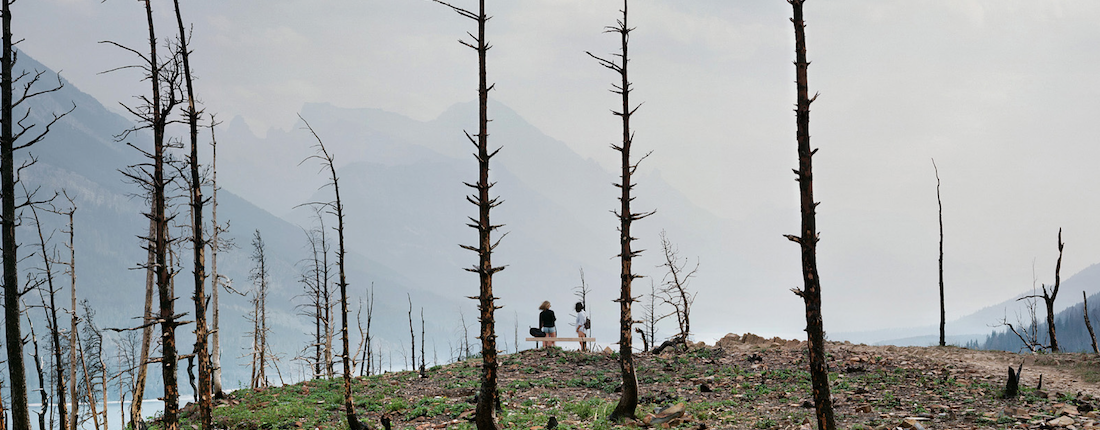
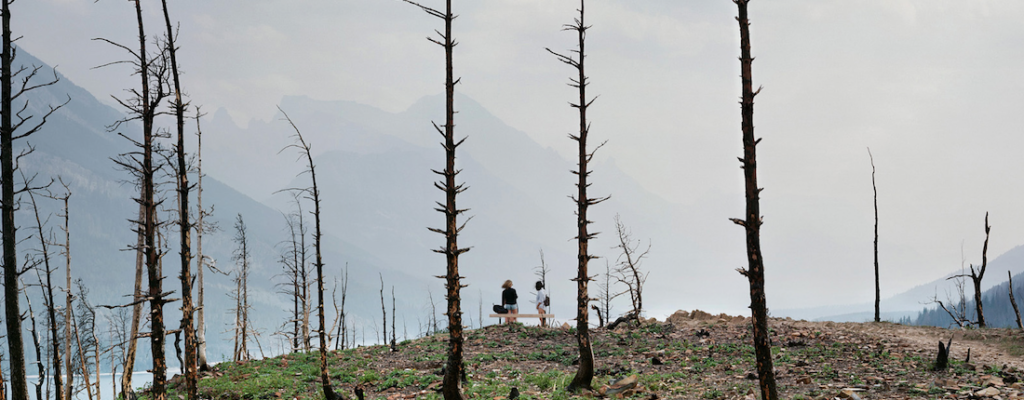
Rutkauskas – Burned Hill. Source: http://ehc.english.ucsb.edu/?page_id=20002

Colonialism as a utopian project

Before hearing TallBear’s talk, I hadn’t recognised the utopian impulse within colonialism. But it doesn’t take much examination of the concept of “the western colonial project” to recognise it as a utopian project.

There is a dark side to utopia, and that is when one person or group’s vision of an ideal world is enforced upon others. The history of Europe in the 20th Century gives us two clear examples: Stalinism and Nazism. Through these I already understood there can be a fine line between utopianism and authoritarianism. Now I see another terrible example of utopian world-building in the violence of settler-colonialism.

For Indigenous People across the American continents, mortality rates due to disease, starvation, forced assimilation and war resulted in estimated 90% mortality rates. For my own people, the Dakota, we now have seven and eight generations of Dakota people who have lived in a Dakota post-apocalyptic world. Indigenous Peoples are still mourning, still living in scarcity, still rebuilding from the quieting of our ancestors’ worlds.

Dr Kim Tallbear

When utopian thinking can lead to genocide and apocalypse, is it only right to give up on utopia?

Utopia as a decolonial project

The realisation that colonialism is a utopian project led me to wonder whether utopia is always a colonial project. I think there are certainly many examples of utopias with colonial logic at their heart whether they realise it or not – many most probably not. These include green utopias with benevolent creators, who nevertheless want to impose their idea of the optimum way to live upon whole cities, countries, continents, planets.

However, there is more than one way to be utopian. There is the being an architect of a superior world way, which is the potentially authoritarian, colonialist, troubling way. Then there is another way where you simply refuse to accept the conventional limits of what is possible and dare to imagine otherwise. This second way is, I think, too important to give up. In fact, it could be crucial to decolonisation.

In her address, TallBear explained

As a Dakota, who has always struggled in a world where an anti-settler state ethic seemed unspeakable, privileging the Dakota Oyate – the people and worldview – was deemed impossible throughout much of my life. Unrealistic, mythological.

Dr Kim TallBear

It is this kind of deemed impossibility that can be undermined by the second type of utopian thinking. Being utopian in this way means being alive to the possibility of things being different from how they currently are. Knowing that things could be different then puts you in a position to ask critical questions. Is this, which my society tells me is impossible, really impossible, or could it be possible after all? Is that a real boundary, or will my hand go right through it? Can I think differently to how I thought I had to think?

Radical hope

TallBear senses a “radical hope” within the multitude of crises facing the US and Canada.

I’m not celebrating what’s happening to the planet and to our non-human relatives and some of the most vulnerable humans […] but I think there are opportunities for us to think about the demise of certain intellectual systems that are incredibly violent as we are reckoning with earthly systems agitations against anthropogenic change.

Dr Kim TallBear

I agree there is hope where the demise of one worldview allows room for others, and I see the thrilling potential for decolonised utopias to rush into the intellectual space left behind.

Dr Kim TallBear is enrolled Sisseton-Wahpeton Oyate and descended from the Cheyenne & Arapaho Tribes of Oklahoma. She is Associate Professor, Faculty of Native Studies, University of Alberta. You can see her address in full below.

INVASION documentary

Elsewhere at the same conference, I attended an online watch party of the short film INVASION. This documentary follows members of the Wet’suwet’en Nation as they protest against the Canadian government permitting oil companies to lay pipelines across their land. The land in question has never been ceded to Canadian settlers. This film brought it home to me that colonialism is not an historical event or a time period that has passed. Colonial logic still prevails and this is why we need utopia. We need better ways of thinking, or new “intellectual systems” to use TallBear’s term.

The Way to Utopia in an Environmental Crisis

My own contribution to the ASLE conference was a paper on Ursula K. Le Guin’s Always Coming Home. The paper, which you can view below, looks at how in Always Coming Home Le Guin manipulates the genre of utopia in order that the form of her book can be true to its feminist, ecological content. I also wrote an article on this subject, which you can read here.

Hello! Here’s an awesome utopian reading list.

It’s my inaugural blog post! I thought I would start by sharing my current utopia-themed reading list with you. As you will see, it’s a list of Afrofuturist, African Sci-Fi and Black Utopias. This is where I’m at right now. In this post I’ll tell you how I got to this amazing place and why I think these books are must-reads.

This list is designed to be collaborative so it was published in the Bristol Utopian Book Collective Facebook group. If you have problems accessing it let me know.

Image by John Jennings

Utopia and colonialism

Utopia has an uneasy relationship with colonialism. I say uneasy, but that’s my feeling about it. It would probably be more accurate to say it has a too easy relationship with colonialism. Take this quote from Thomas More’s Utopia of 1516, the foundational text of the genre, about how the original Utopia came to be:

Utopus, that conquered it (whose name it still carries, for Abraxa was its first name), brought the rude and uncivilized inhabitants into such good government, and to that measure of politeness, that they now far excel all the rest of mankind.

Thomas More, Utopia (London: Verso, 2016) pp72-73

I’ve written elsewhere about how the Black Lives Matter protests in Bristol in June 2020 brought the colonialist logic within utopia to the forefront of my mind. To address this I could have re-read the old utopias through an anti-colonial lens, and I might still do this one day. But what I really wanted to do was seek out Black, Indigenous and African utopias and start reading those instead.

The first thing I read was N.K. Jemisin’s How Long ‘Til Black Future Month? Since then I’ve read Nisi Shawl’s Everfair, Nnedi Okorafor’s Lagoon, The Deep by Rivers Solomon with Daveed Diggs, William Hutson and Jonathan Snipes, and I’m currently reading Paradise by Toni Morrison. If you know of any others that should be on my list, please add them to the collaborative doc, post in the comments below or contact me.

Other things I’m currently reading…

Braiding Sweetgrass, Robin Wall Kimmerer

Spike Island in Bristol are currently hosting a Braiding Sweetgrass reading group, meeting monthly (online) to discuss extracts from the book. While this is far from sci-fi, I’m interested because Kimmerer explores other ways of being and relating to nature than the prevailing consumer capitalist status quo, with its insistence on defining the more-than-human world as ‘natural resources’.

Underland, Robert MacFarlane

This I’m reading for another book group. I actually suggested it myself, despite subscribing to Kathleen Jamie‘s view of the author as ‘A Lone, Enraptured Male‘, peddling an exclusive and over-privileged idea of nature. But everyone goes on about how brilliant this book is, so I’m going to give it a try.